
标签:代码量 normal func create ogg bsp float 分享 方法
什么意思呢?
学习一门语言有一个很好的方法就是阅读优秀的开源项目源码,学习优秀前辈的编码方式,同时发现自己的知识盲区,不断获取新知识!cache2go很精简,代码量很少,非常适合刚接触go语言的同学作为入门级项目来读源码。
下面我会先介绍项目组成,然后讲解核心数据结构,再梳理整个实现逻辑,来帮助大家掌握整个项目。
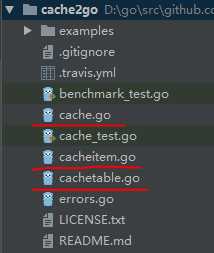
项目目录结构如上图所示,可以看到功能实现相关源码文件只有3个:
项目中只涉及到2个复杂的数据类型,分别是:
含义和字面意义一致,一个是缓存表,一个是缓存表中的条目。下面分别看一下这2个结构是怎么定义的。
CacheItem类型是用来表示一个单独的缓存条目,源码如下所示,每个字段都很清晰易懂,注释稍长的属性已经中文标注。
type CacheItem struct {
	sync.RWMutex

	// The item‘s key.
	key interface{}
	// The item‘s data.
	data interface{}
	// How long will the item live in the cache when not being accessed/kept alive.【不被访问后存活时间】
	lifeSpan time.Duration

	// Creation timestamp.
	createdOn time.Time
	// Last access timestamp.
	accessedOn time.Time
	// How often the item was accessed.
	accessCount int64

	// Callback method triggered right before removing the item from the cache【被删除时触发的回调方法】
	aboutToExpire func(key interface{})
}
CacheTable描述了缓存中的一个表项,里面的items属性就是上面讲到的CacheItem类型实例。这里除了常规属性外还有若干函数类型的属性,源码如下所示:
type CacheTable struct {
	sync.RWMutex

	// The table‘s name.
	name string
	// All cached items.【一个表中的所有条目都存在这个map里,map的key是任意类型,值是CacheItem指针类型】
	items map[interface{}]*CacheItem

	// Timer responsible for triggering cleanup.【负责触发清除操作的计时器】
	cleanupTimer *time.Timer
	// Current timer duration.【清除操作触发的时间间隔】
	cleanupInterval time.Duration

	// The logger used for this table.
	logger *log.Logger

	// Callback method triggered when trying to load a non-existing key.【需要提取一个不存在的key时触发的回调函数】
	loadData func(key interface{}, args ...interface{}) *CacheItem
	// Callback method triggered when adding a new item to the cache.【增加一个缓存条目时触发的回调函数】
	addedItem func(item *CacheItem)
	// Callback method triggered before deleting an item from the cache.【删除前触发的回调函数】
	aboutToDeleteItem func(item *CacheItem)
}
如上所示,cache2go的核心数据结构很简洁,应该比较容易理解。当然没有完全理解每个字段这样定义的原因也别急,看完下面的代码逻辑后反过来再看数据结构,肯定就明白每个字段的作用了。
我们的思路是从下往上分析代码,什么意思呢?就是说先看和item相关的操作,再看包含item的table相关的代码,最后看操作table的cache级别的逻辑。所以下面我们要先看cacheitem.go的代码,接着分析cachetable.go,然后看cache.go,最后看3个文件中的源码互相间关联是什么。

如上图,这个源码文件中只包含了一个类型CacheItem和一个函数NewCacheItem()的定义。CacheItem有哪些属性前面已经看过了,下面先看NewCacheItem()函数:
func NewCacheItem(key interface{}, lifeSpan time.Duration, data interface{}) *CacheItem {
	t := time.Now()
	return &CacheItem{
		key:           key,
		lifeSpan:      lifeSpan,
		createdOn:     t,
		accessedOn:    t,
		accessCount:   0,
		aboutToExpire: nil,
		data:          data,
	}
}
cacheitem.go中除了CacheItem类型的定义,NewCacheItem()函数的定义外,还有一个部分就是CacheItem的方法定义,一共8个
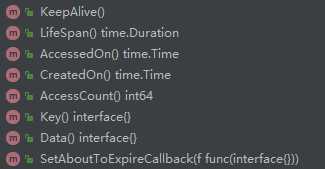
源码看起来行数不少,内容其实很简单,主要是元素获取操作,这里需要留意读写操作都是加了相应的读写锁的,还记得开头提到的cache2go是一个并发安全的程序吗?并发安全就体现在这些地方。下面最复杂的是最后一个回调函数的设置,这个方法的形参是f func(interface{}),也就是说形参名为f,形参类型是func(interface{}),这是一个函数类型,这个函数类型的参数是一个interface{},也就是空接口,因为任意类型都可以被认为实现了空接口,所以这里可以接收任意类型的实参。也就是说f的类型是一个可以接收任意类型参数的函数类型。有点绕,需要静下心来理解一下哦~
源码如下:
// KeepAlive marks an item to be kept for another expireDuration period.【将accessedOn更新为当前时间】
func (item *CacheItem) KeepAlive() {
	item.Lock()
	defer item.Unlock()
	item.accessedOn = time.Now()
	item.accessCount++
}

// LifeSpan returns this item‘s expiration duration.
func (item *CacheItem) LifeSpan() time.Duration {
	// immutable
	return item.lifeSpan
}

// AccessedOn returns when this item was last accessed.
func (item *CacheItem) AccessedOn() time.Time {
	item.RLock()
	defer item.RUnlock()
	return item.accessedOn
}

// CreatedOn returns when this item was added to the cache.
func (item *CacheItem) CreatedOn() time.Time {
	// immutable
	return item.createdOn
}

// AccessCount returns how often this item has been accessed.
func (item *CacheItem) AccessCount() int64 {
	item.RLock()
	defer item.RUnlock()
	return item.accessCount
}

// Key returns the key of this cached item.
func (item *CacheItem) Key() interface{} {
	// immutable
	return item.key
}

// Data returns the value of this cached item.
func (item *CacheItem) Data() interface{} {
	// immutable
	return item.data
}

// SetAboutToExpireCallback configures a callback, which will be called right
// before the item is about to be removed from the cache.【设置回调函数,当一个item被移除的时候这个函数会被调用】
func (item *CacheItem) SetAboutToExpireCallback(f func(interface{})) {
	item.Lock()
	defer item.Unlock()
	item.aboutToExpire = f
}
到这里就看完这个源文件了,是不是很轻松呢~
下面继续看另外2个源码文件吧
标签:代码量 normal func create ogg bsp float 分享 方法
原文地址:https://www.cnblogs.com/cloudgeek/p/9146736.html
