
1 代码
#include <map>
#include <iostream>
#include <string>
#include <vector>
#include <climits>
#include <algorithm>
#include <math.h>
#include <utility>
using namespace std;

class A
{

  public:
    A()
        : a1(2)
    {
        int i = 0;
        ++i;
    }
    virtual int do1() { return 1; }
    virtual int do2() { return 2; }
    int a1;
};

class B : public A
{
  public:
    B()
        : b1(2)
    {
        int i = 0;
        ++i;
    }

    virtual int do1() { return 3; }
    int b1;
    int b2;
};

class C : public virtual A
{
  public:
    C()
        : c1(2)
    {
        int i = 0;
        ++i;
    }
    virtual int do1() { return 4; }
    int c1;
};

int main()
{
    A *a = new A;
    B *b = new B;
    C *c = new C;

    A *ab = b;
    b->do1();
    A *ac = c;
}
构造函数体中的代码没有意义只是为了解释代码执行的顺序。
首先看:
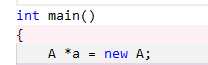
汇编:
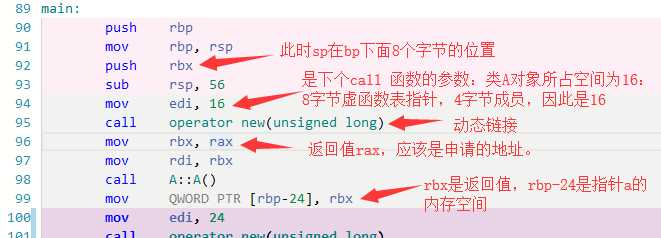
上面最后一个注释错了,rbx是申请的内存,构造函数没有返回值,因此rbx直接赋值给指针a了。
然后看A:A()
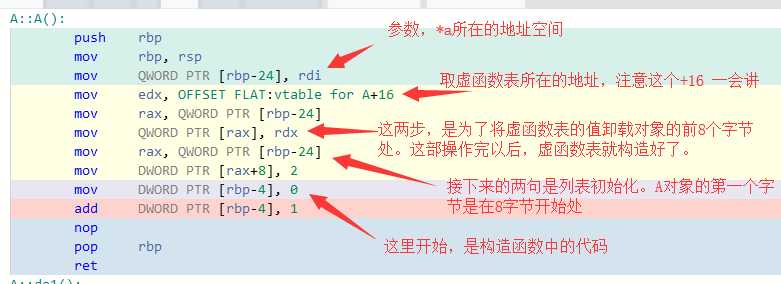
(至于为什么是:OFFSET FLAT:vtable for B+16 。抱歉不知道啊。查到的时候再补)
紧接着看看 vtable for A 是什么:
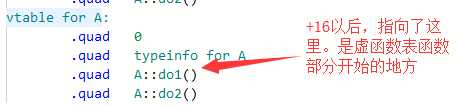
然后再看:
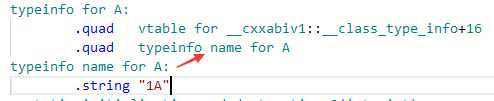
这里A就算构造结束,还算是简单。
看B的构造
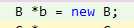
汇编
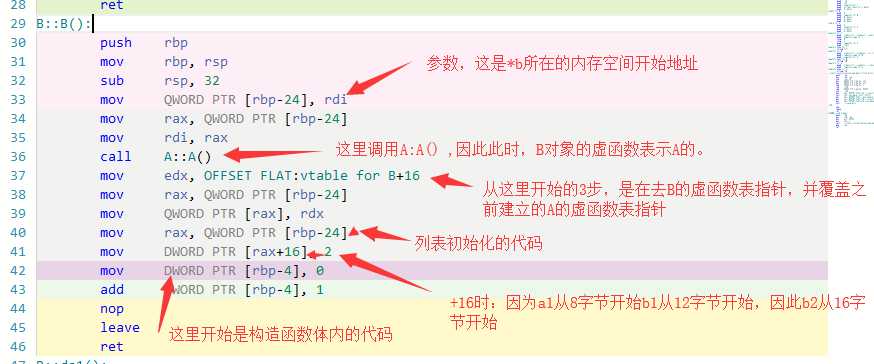
可以非虚继承就是在派生类的内存空间上依次调用基类的构造函数。基类的数据成员在派生类中依次摆放。并且派生类的数据成员的偏移在编译阶段就确定好了。
虚继承
