
标签:
首先这里需要宣传一下,qtun的网站已经开张了,功能正在逐步添加中。
一、嵌入lua的原因
由于qtun的可配置参数不断增多,因此有必要将参数写入到配置文件之中。又由于C语言并不擅长做字符串的处理,因此加入了轻量级的lua脚本语言,同时嵌入lua更有助于加入第三方插件的支持。
二、代码的修改
extern int init_path(char* cmd);
extern int init_lua();
extern void show_logo();
extern void conf_init(library_conf_t* conf);
int script_global_init(lua_State* lua)
{
    load_lib(lua, "_G", luaopen_base);
    load_lib(lua, LUA_TABLIBNAME, luaopen_table);
    load_lib(lua, LUA_STRLIBNAME, luaopen_string);
    load_lib(lua, LUA_IOLIBNAME, luaopen_io);

    lua_pushcfunction(lua, _syslog);
    lua_setglobal(lua, "_syslog");

    init_qtun_state(lua);
    init_qtun_conf(lua);
    init_qtun_log(lua);
    return 1;
}
static void init_qtun_state(lua_State* lua)
{
    get_qtun_obj(lua);
    lua_pushstring(lua, "state");
    lua_newtable(lua);
    lua_newtable(lua);
    lua_pushstring(lua, "__index");
    lua_pushcfunction(lua, state_get);
    lua_settable(lua, -3);
    lua_setmetatable(lua, -2);

    lua_settable(lua, -3);
    lua_pop(lua, 1);
}

static void init_qtun_conf(lua_State* lua)
{
    get_qtun_obj(lua);
    lua_pushstring(lua, "conf");
    lua_newtable(lua);

    lua_newtable(lua);
    lua_pushstring(lua, "__index");
    lua_pushcfunction(lua, conf_get);
    lua_settable(lua, -3);
    lua_pushstring(lua, "__newindex");
    lua_pushcfunction(lua, conf_set);
    lua_settable(lua, -3);
    lua_setmetatable(lua, -2);

    lua_settable(lua, -3);
    lua_pop(lua, 1);
}

static void init_qtun_log(lua_State* lua)
{
    int new_log = 0;

    get_qtun_obj(lua);
    lua_pushstring(lua, "log");
    lua_gettable(lua, -2);
    if (lua_isnil(lua, -1))
    {
        lua_pop(lua, 1);
        lua_pushstring(lua, "log");
        lua_newtable(lua);
        new_log = 1;
    }
    push_log_level(lua, "LOG_EMERG"  , 0);
    push_log_level(lua, "LOG_ALERT"  , 1);
    push_log_level(lua, "LOG_CRIT"   , 2);
    push_log_level(lua, "LOG_ERR"    , 3);
    push_log_level(lua, "LOG_WARNING", 4);
    push_log_level(lua, "LOG_NOTICE" , 5);
    push_log_level(lua, "LOG_INFO"   , 6);
    push_log_level(lua, "LOG_DEBUG"  , 7);
    if (new_log)
        lua_settable(lua, -3);
    lua_pop(lua, 1);

}
int script_load_config(lua_State* lua, library_conf_t* conf, const char* file_path)
{
    char path[MAX_PATH];
    lua_pushlightuserdata(lua, conf);
    lua_setglobal(lua, "__conf__");

    strcpy(path, qtun->this_path);
    strcat(path, "scripts/load_config.lua");
    if (luaL_dofile(lua, path) != 0)
    {
        fprintf(stderr, "%s\n", lua_tostring(qtun->lua, -1));
        lua_close(qtun->lua);
        exit(1);
    }
    return 1;
}
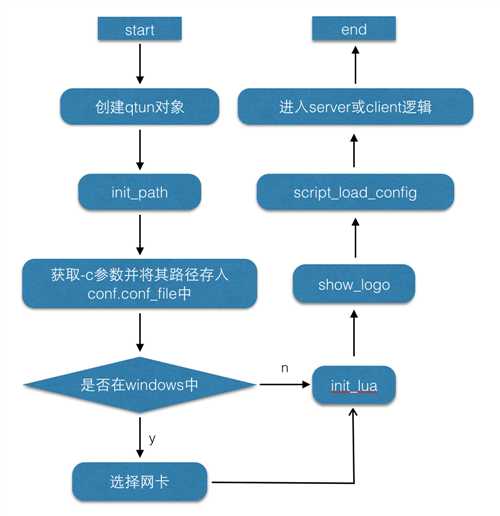
三、lua脚本
最后让我们来分别看一下这三个lua脚本长啥样
print(‘┏━━━━━━━━━━━━━━━━━━━━━━━━━━━━━┓‘)
print(‘┃   ...   .....  .   .  .  .  ┃‘)
print(‘┃  .   .    .    .   .  .. .  ┃‘)
print(‘┃  .   .    .    .   .  . ..  ┃‘)
print(‘┃   ... .   .     ...   .  .  ┃‘)
print(‘┃                             ┃‘)
print(‘┗━━━━━━━━━━━━━━━━━━━━━━━━━━━━━┛‘)
这个logo是不是很有爱^_^
qtun = {
    log = {
        syslog = function (level, fmt, ...)
            _syslog(level, string.format(fmt, ...))
        end
    }
}

function trim(s)
    return s:gsub(‘^%s*(.-)%s*$‘, ‘%1‘)
end

function is_numeric(s)
    return tonumber(s) ~= nil
end

function is_string(s)
    return not is_numeric(s)
end
这里包装了一些公共函数local function append_key_value(key, value)
if value == ‘true‘ then
value = true
elseif value == ‘false‘ then
value = false
elseif is_numeric(value) then
value = tonumber(value)
elseif key == ‘log_level‘ then
if is_string(value) then
value = qtun.log[value]
end
end
qtun.conf[key] = value
end
local function set_true(key)
qtun.conf[key] = true
end
local file = io.open(qtun.conf.conf_file, ‘r‘)
while true do
::start::
local line = file:read(‘*line‘)
if line == nil then break end
local len = #line
local key = ‘‘
local first = ‘‘
local start = 0
local have_key = false
local have_value = false
local added = false
local j = 0
for i=0, len do
j = i
local ch = line:sub(i + 1, i + 1)
if first == ‘‘ and ch ~= ‘ ‘ then
first = ch
end
if ch == ‘#‘ then
if trim(line:sub(start, i)) == ‘‘ then goto start end
have_value = true
if have_key then
append_key_value(key, trim(line:sub(start, i)))
else
set_true(trim(line:sub(start, i)))
end
added = true
break
elseif ch == ‘=‘ then
key = trim(line:sub(start, i))
if key == ‘‘ then
error(‘missing key‘)
end
have_key = true
start = i + 2
end
end
if first == ‘#‘ then goto start end
if not added then
if not have_key then
local key = trim(line:sub(start, j))
if key == ‘‘ then goto start end
set_true(key)
else
append_key_value(key, trim(line:sub(start, j)))
end
end
end
file:close()
解析配置文件的主要逻辑都在这里了四、完整代码
完整代码可到step14中查看
Jump The Great Firewall【step14 嵌入lua】
标签:
原文地址:http://www.cnblogs.com/lwch/p/4458414.html
